PE/PP film washing line.
Six models for flexible waste.
A dedicated washing line for PE film, PP woven bags, agricultural film, stretch film and drip tape. Select the model by bulk density, contamination, moisture and target flake output.
Film is difficult because its density, moisture and contamination change from bale to bale.
The washing line therefore begins with size reduction and wet pre-washing. Shredding in the presence of water opens the material, releases trapped soil and gives the downstream washers a more consistent feed.
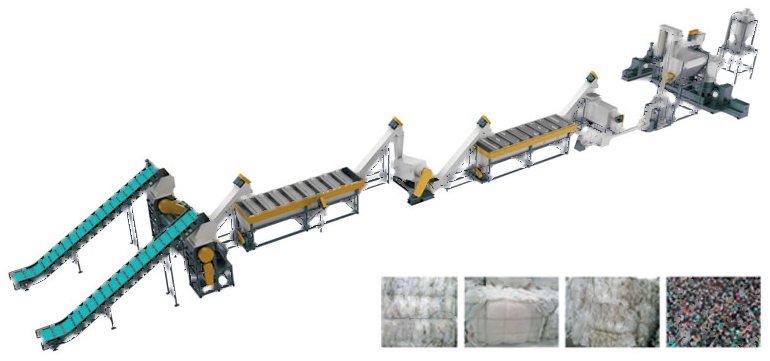
BENK-PWL-FLM uses friction washing, float-sink separation, mechanical dewatering and thermal drying to produce clean film flake. Model selection depends on the film mix, sand load, needed rinse stages and the downstream pelletizer.
Shred, open and pre-wash
A wet shredding stage handles bales, bags and entangled film while beginning separation of sand and organic matter.
Multi-stage friction cleaning
Pre-wash, friction wash and float-sink separation remove heavy contamination and non-PE/PP plastics.
Mechanical first, thermal second
Squeezing or centrifugal dewatering reduces water load before thermal drying and extrusion.
Six capacity points
300, 500, 800, 1,000, 1,500 and 2,000 kg/h reference models cover small and industrial film recovery.
Keep the material moving. Keep the moisture under control.
The process removes contamination early, reduces moisture mechanically and prepares a stable flake for a separate film pelletizing line.
Feed & shred
Meter bales, bags, film or drip tape into wet shredding.
Pre-wash
Release sand, soil and organic contamination from the film.
Friction wash
Strip surface contamination and printing residue.
Float-sink
Separate PE/PP from heavier plastics and sinkable contaminants.
Rinse
Reduce residual soil and carry-over contamination before drying.
Squeeze & dry
Mechanical dewatering and hot-air drying stabilize the flake.
Buffer & transfer
Store washed flake for packing or pelletizing.
Water circuit
Optional filtration and circulation reduce fresh-water consumption.
Complete PE/PP film washing line model range.
Different capacities require different shredder, washer, dewatering and drying sizes. The reference range below covers six model points from 300 to 2,000 kg/h.
| Model | Wash capacity | Installed power | Footprint | Water | Operators |
|---|---|---|---|---|---|
| BENK-PWL-FLM-0300 | 300 kg/h | ≈180 kW | ≈300 m² | 6–8 m³/h | 4 |
| BENK-PWL-FLM-0500 | 500 kg/h | ≈300 kW | ≈400 m² | 8–10 m³/h | 4 |
| BENK-PWL-FLM-0800 | 800 kg/h | ≈420 kW | ≈450 m² | 10–14 m³/h | 6 |
| BENK-PWL-FLM-1000 | 1,000 kg/h | ≈500 kW | ≈450 m² | 10–15 m³/h | 6 |
| BENK-PWL-FLM-1500 | 1,500 kg/h | ≈650 kW | ≈850 m² | 14–18 m³/h | 6 |
| BENK-PWL-FLM-2000 | 2,000 kg/h | ≈840 kW | ≈1,300 m² | 15–20 m³/h | 6 |
For a 500–800 kg/h film washing target, compare BENK-PWL-FLM-0500 and BENK-PWL-FLM-0800. If the feed carries heavy sand, price the extra pre-wash and water-treatment scope before choosing the smaller model.
Dry enough to feed. Clean enough to sell.
The washing line can stop at washed flake or continue to pellets. Either way, moisture and contamination are controlled at each transfer point.
A compact flow for a difficult material.
The washing, dewatering and drying sections are arranged around service access, water containment and stable material transfer.
One washing platform for the flexible-waste stream.
The same process logic can serve agricultural, packaging and industrial film recovery when the washing and cutting scope is matched to the feed.
Mulch film and greenhouse film
LDPE, LLDPE and stretch film
PP woven bags and FIBC
Drip tape and irrigation film
PP nonwoven and raffia
Recycled film and packaging compounds
Match the washing intensity to the bale.
Contamination in film is rarely uniform. Add modules according to the bale quality and downstream pellet specification.
Film flake needs densification before stable pelletizing.
Compare the separate PE/PP film pelletizing range, including cutter-compactor feeding, vacuum degassing and water-ring cutting.
One engineering team from material review to stable production.
BENK engineers and manufactures plastic extrusion, washing and pelletizing equipment in Zhangjiagang, China. The recycling team works from a material sample and target output through layout, machine selection, factory testing, installation and operator training.
Long-running engineering and manufacturing experience in plastic extrusion and recycling equipment.
Washing stages, drying method and pelletizing configuration are selected from the actual feed and contamination profile.
Line sections are assembled and trial run before shipment, with output and operating records for the agreed test material.
Process design, plant layout, utilities, installation, commissioning and training can sit under one project team.
Quality-controlled fabrication and assembly with CE-compliant electrical and safety components.
Remote diagnostics, spare parts and process optimization support for the operating life of the line.
Build the right process around the line.
Compare the complementary washing or pelletizing stage, or read the full selection guide before requesting a quotation.
Useful reading before you compare plastic recycling line prices.
These practical guides explain how capacity, contamination, drying and pellet quality decide the real cost and return of a washing or pelletizing line.
How to choose the right washing line capacity
Why nominal kg/h is not enough, and how to size washing, drying and pelletizing as one mass balance.
Read the guide → PET recyclingPET bottle to rPET pellets: the complete route
From bale opening and hot washing to filtration, vacuum degassing, pelletizing and optional SSP.
Explore PET processing → Film & rigidWhy drying determines pellet quality
How moisture, bulk density and contamination change the choice between film and rigid pelletizing systems.
Compare line options →Send the material and capacity target. BENK will map the closest washing and pelletizing models before you request a formal quotation.
PE/PP film washing line questions.
A representative bale and a realistic moisture reading are the fastest way to choose the right model.
Can one line handle film, woven bags and drip tape?
Yes, within a defined operating window. The shredding, washing and drying sections are sized around the mix; significant changes in ratio may require different conveyor speeds and wash stages.
Which model should I choose for 500 kg/h?
BENK-PWL-FLM-0500 is the direct reference model for 500 kg/h. If the film is heavily contaminated, compare the 800 kg/h model with extra pre-wash to protect stable output.
Do I need a water-treatment package?
It depends on local discharge rules, fresh-water cost and the soil load. A circulation and filtration package is often justified for high-contamination agricultural film.
Can washed film flake be sold directly?
Yes, if the buyer accepts the specified moisture and contamination. Otherwise, add a film pelletizing line to produce denser, more transportable pellets.
How do I choose the pelletizer after washing?
The pelletizer should be sized from the washed bulk density, moisture, contamination and target output, not from the washing line nameplate alone.
Get a recommended model, budget range and delivery estimate.
Give BENK the material, contamination level, target output and end product. Our engineers will review the duty and reply with a sized washing or pelletizing line — not a generic catalogue answer.