PE/PP film pelletizing line.
Five models for dense, stable pellets.
A separate film pelletizing line for washed PE film, PP woven bags, agricultural film, stretch film and drip tape. The cutter-compactor and extruder are selected by bulk density and output.
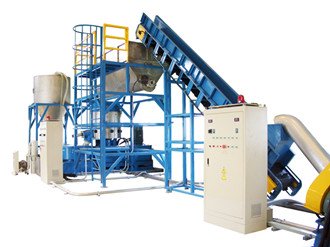
Film pelletizing starts with densification, not with a standard hopper.
Washed film is light, fluffy and variable in moisture. Feeding it directly into a standard extruder causes unstable intake, low output and inconsistent melt pressure. A cutter compactor or force feeder densifies the flake and creates a stable feed.
BENK-PRL-FLM is a separate pelletizing family for washed film flake. The model range covers 300 to 1,300 kg/h with different main motors, compactor motors and cutting options.
Cutter-compactor
Cut, compact and preheat light film flake before extrusion.
Low-temperature extrusion
Screw and barrel design stabilize melt pressure and reduce thermal damage.
Hydraulic screen changing
Remove residual contamination without stopping production.
Vacuum venting
Remove moisture, air and printing volatiles from the melt.
Water-ring pellets
Cool and cut pellets for stable shape and bulk density.
Five capacity points
300, 500, 700, 1,000 and 1,300 kg/h reference models cover different film recycling projects.
Compact the flake. Stabilize the melt. Cut repeatable pellets.
The compactor and extruder are matched to the washed film’s bulk density and output — the washing line is a separate upstream scope.
Flake buffer
Receive washed film flake and control feed rate.
Cutter-compactor
Cut, densify and preheat the material.
Extrusion
Melt and homogenize the compacted flake.
Filtration
Filter residual contamination with a hydraulic screen changer.
Vacuum degassing
Remove moisture, air and volatiles.
Water-ring cutting
Cut the melt into uniform pellets.
Dewater & screen
Cool, dewater and classify the pellets.
Packing
Convey pellets to a silo or bagging station.
Complete PE/PP film pelletizing model range.
Five reference models separate cutter-compactor size and main-motor power across different output targets.
| Model | Output | Main motor | Compactor | L/D | Cutting |
|---|---|---|---|---|---|
| BENK-PRL-FLM-0300 | 300–380 kg/h | 90/110 kW | 55 kW | 36:1 | Water-ring / strand |
| BENK-PRL-FLM-0500 | 500–650 kg/h | 160/185 kW | 90/110 kW | 36:1 | Water-ring / strand |
| BENK-PRL-FLM-0700 | 550–700 kg/h | 185/220 kW | 90/110 kW | 36:1 | Water-ring / strand |
| BENK-PRL-FLM-1000 | 850–1,000 kg/h | 250/280 kW | 132 kW | 36:1 | Water-ring / strand |
| BENK-PRL-FLM-1300 | 1,000–1,300 kg/h | 280/315 kW | 132/160 kW | 36:1 | Water-ring / strand |
For a 500–800 kg/h film pelletizing target, compare BENK-PRL-FLM-0500 and -0700. If the feed is heavily printed or wet, price the double-stage and degassing options before choosing.
Pellet consistency is a feeding and degassing result.
A stable cutter-compactor feed and effective vacuum venting do more for pellet quality than simply increasing motor size.
Film compaction and pelletizing detail.
The pelletizing line can be supplied separately from the washing line or matched as a turnkey project.
Pellets for film, bags and PCR compounds.
The final pellet specification determines the filtration, degassing and cutting configuration.
Blown film and packaging film
LDPE and LLDPE bags
PP woven products and FIBC
Agricultural film compounds
Moulded recycled products
Recycled-content compounds
Tune the pelletizer to the film quality.
The model can be configured for clean film flake or challenging post-consumer material.
The pelletizer is only as stable as the washed film feed.
Compare six PE/PP film washing models from 300 to 2,000 kg/h and choose the right upstream flake specification.
One engineering team from material review to stable production.
BENK engineers and manufactures plastic extrusion, washing and pelletizing equipment in Zhangjiagang, China. The recycling team works from a material sample and target output through layout, machine selection, factory testing, installation and operator training.
Long-running engineering and manufacturing experience in plastic extrusion and recycling equipment.
Washing stages, drying method and pelletizing configuration are selected from the actual feed and contamination profile.
Line sections are assembled and trial run before shipment, with output and operating records for the agreed test material.
Process design, plant layout, utilities, installation, commissioning and training can sit under one project team.
Quality-controlled fabrication and assembly with CE-compliant electrical and safety components.
Remote diagnostics, spare parts and process optimization support for the operating life of the line.
Build the right process around the line.
Compare the complementary washing or pelletizing stage, or read the full selection guide before requesting a quotation.
Useful reading before you compare plastic recycling line prices.
These practical guides explain how capacity, contamination, drying and pellet quality decide the real cost and return of a washing or pelletizing line.
How to choose the right washing line capacity
Why nominal kg/h is not enough, and how to size washing, drying and pelletizing as one mass balance.
Read the guide → PET recyclingPET bottle to rPET pellets: the complete route
From bale opening and hot washing to filtration, vacuum degassing, pelletizing and optional SSP.
Explore PET processing → Film & rigidWhy drying determines pellet quality
How moisture, bulk density and contamination change the choice between film and rigid pelletizing systems.
Compare line options →Send the material and capacity target. BENK will map the closest washing and pelletizing models before you request a formal quotation.
PE/PP film pelletizing line questions.
The most important inputs are film bulk density, moisture and printing/contamination load.
Can the pelletizer run 100% washed agricultural film?
Yes, with a suitable cutter-compactor, filtration and degassing configuration. A sample is recommended because sand, ink and moisture vary widely.
Which model is right for 800 kg/h?
The nearest reference models are BENK-PRL-FLM-0700 and BENK-PRL-FLM-1000. The final choice depends on bulk density, moisture and filtration.
Do I need a double-stage pelletizer?
Double-stage extrusion is considered for heavily printed, wet or contaminated film that needs extra filtration and degassing.
What cutting system is recommended?
Water-ring cutting is common for film pellets and high automation. Strand cutting may be selected for specific grades or product requirements.
Can I buy the pelletizing line separately?
Yes. The pelletizing line is a separate product family and can be fed by an existing washed-film flake supply.
Get a recommended model, budget range and delivery estimate.
Give BENK the material, contamination level, target output and end product. Our engineers will review the duty and reply with a sized washing or pelletizing line — not a generic catalogue answer.