
WDP-08 · Moisture resistance
Waterproof WPC Door Panel Production Line: Moisture Resistance Has to Survive the Whole Process
A WPC panel can resist water and still develop a problem at the edge. The material formula matters, but so do voids, cooling stress, cutting quality and the way the finished door is sealed.
Technical review: BENK Machinery · Updated 6 November 2026
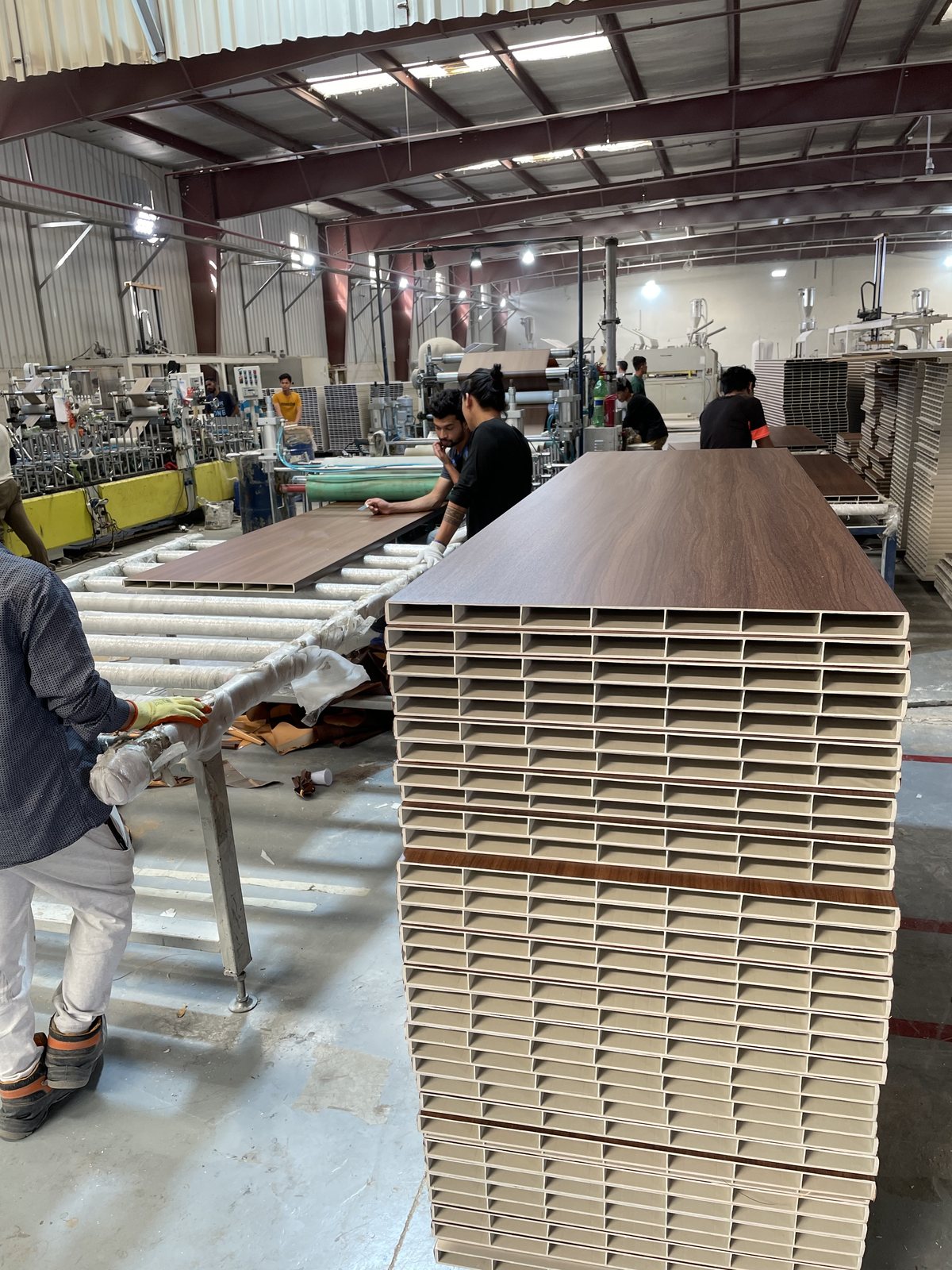
Waterproof is a broad word in door marketing. For a WPC door panel, the practical question is how the board behaves when it is exposed to humidity, splashes or a damp bathroom over time. The answer depends on the full construction, not one additive.
This page looks at the production side of moisture resistance. It is written for factories supplying humid climates, bathroom doors, hotel projects or coastal markets where a weak edge can become a complaint.
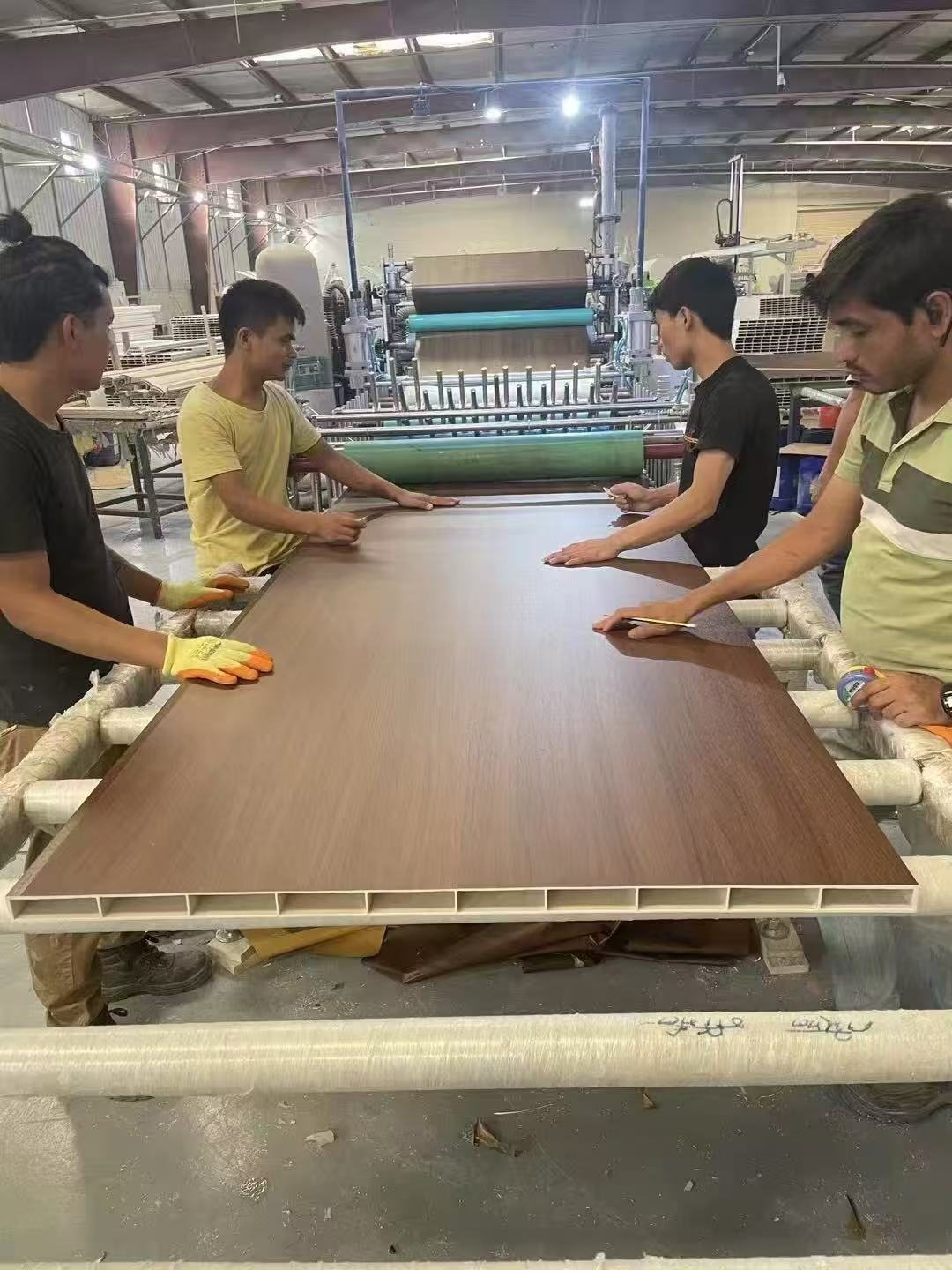
Moisture enters through the details
The face of a well-made WPC panel is usually less exposed than the cut edge, hinge pocket or lock area. If the board has internal voids or a rough cut, water vapour has more opportunity to collect. A thin outer wall can also be damaged during handling before installation.
The formulation must be suitable, but the line must produce a dense, closed surface and a clean edge. That is why a moisture-resistant product should be evaluated as a complete panel, not as a compound sample alone.
- Open voids exposed at the cut edge
- Rough or chipped edges
- Unmelted filler at the surface
- Surface scratches that hold moisture
- Poorly sealed hinge and lock pockets
How the extrusion line supports moisture resistance
Good venting and controlled moisture in the raw material reduce gas pockets. Stable die pressure helps the outer skin form consistently. Vacuum calibration then holds the dimensions while the surface cools against a clean tool.
The cutter and handling equipment should leave a clean edge without crushing the section. If the panel is going into a bathroom or wet area, the door maker should also seal the cut edges and hardware pockets with a compatible system.
How BENK configures a humid-market line
BENK can review the WPC door panel line around the buyer's climate target, panel section and finishing route. The line may include material drying or pre-treatment, a vented extruder setup, a polished die, a six-metre calibration table and a haul-off arrangement that protects the panel surface.
No machine can replace a weak formula or poor edge sealing. BENK's role is to make the extruded board consistent enough for the buyer's own water-resistance testing and door assembly process.
- Raw-material moisture control before mixing
- Vented extruder configuration where required
- Stable die pressure and skin formation
- Clean cutting and edge support
- A test plan for water absorption and dimensional change
Production sequence
From material preparation to finished panel
- 01
Check the formula
Confirm PVC grade, wood powder, filler and additives with the material supplier.
- 02
Control moisture
Dry or condition raw materials before mixing.
- 03
Vent the melt
Remove gas and moisture during plasticising where the formulation requires it.
- 04
Form a closed skin
Balance die temperature and pressure across the panel.
- 05
Calibrate and cool
Hold dimensions while the surface solidifies.
- 06
Cut a clean edge
Support the panel to avoid crushing the section.
- 07
Test the finished panel
Use the intended water-exposure and dimension-change method.
Reference window
Reference specification and planning range
The figures below are a starting point for discussion. The final line specification should follow the approved panel drawing, material formula and trial result.
| Item | Reference / planning note |
|---|---|
| Typical matrix | PVC, wood powder, mineral filler and additives |
| Moisture control | Material drying or conditioning according to the formula |
| Extruder | Vented or non-vented configuration after material review |
| Calibration | Six-metre vacuum table in the reference line |
| Edge quality | Clean cutting and supported handling |
| Testing | Water exposure, thickness swell and dimensional stability by the agreed method |
How BENK fits the project
Where the BENK line supports the result
BENK can configure the line for a moisture-resistant WPC door board, but the final performance belongs to the complete formulation and door construction. Test results from the buyer's approved panel should be used before making a market claim.
Buyer checklist
What to settle before you compare quotations
- Ask for the water-resistance test method, not just a marketing claim.
- Confirm whether the panel will be used for bathroom, kitchen, exterior or general interior doors.
- Check the cut edge under a magnifier for voids and rough material.
- Review the edge-sealing system with the door assembly team.
- Test a complete door sample, including hardware pockets, before launch.
Questions buyers ask
WPC door panel line FAQ
Is a WPC door panel 100% waterproof?
That claim should be avoided unless it is supported by a defined test and the complete door construction. WPC is moisture-resistant, but edges, joints and hardware areas still need proper design.
Which part of a WPC door is most vulnerable to moisture?
The cut edges and hardware pockets are common weak points. Good panel quality helps, but the door assembly still needs suitable sealing and drainage.
Does the extrusion line affect water resistance?
It can affect voids, surface skin and edge quality. Those factors influence how the panel behaves under moisture exposure.
What test should a buyer request?
The test should match the target market and application. Typical checks include water absorption, thickness swell and dimensional change after exposure.
Project brief
Tell us the panel, not just the machine.
Send the panel drawing, material formula, target output and factory location. BENK can then review the line configuration against the actual product.