
Project Overview
This project involved a Brazilian customer producing red terracotta-style HDPE roof tiles on a complete extrusion line. The finished product needed to combine the traditional appearance of a clay or PVC roof tile with the toughness, weather resistance and recyclability of HDPE.
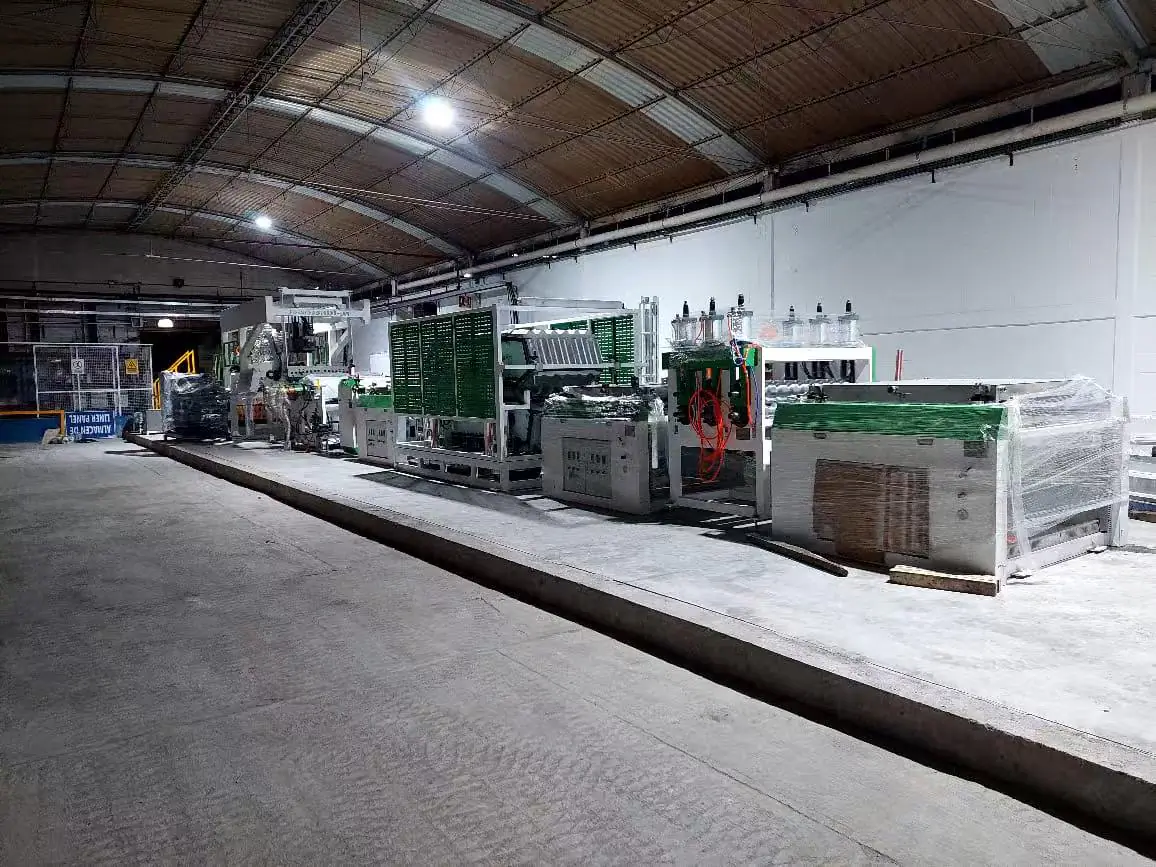
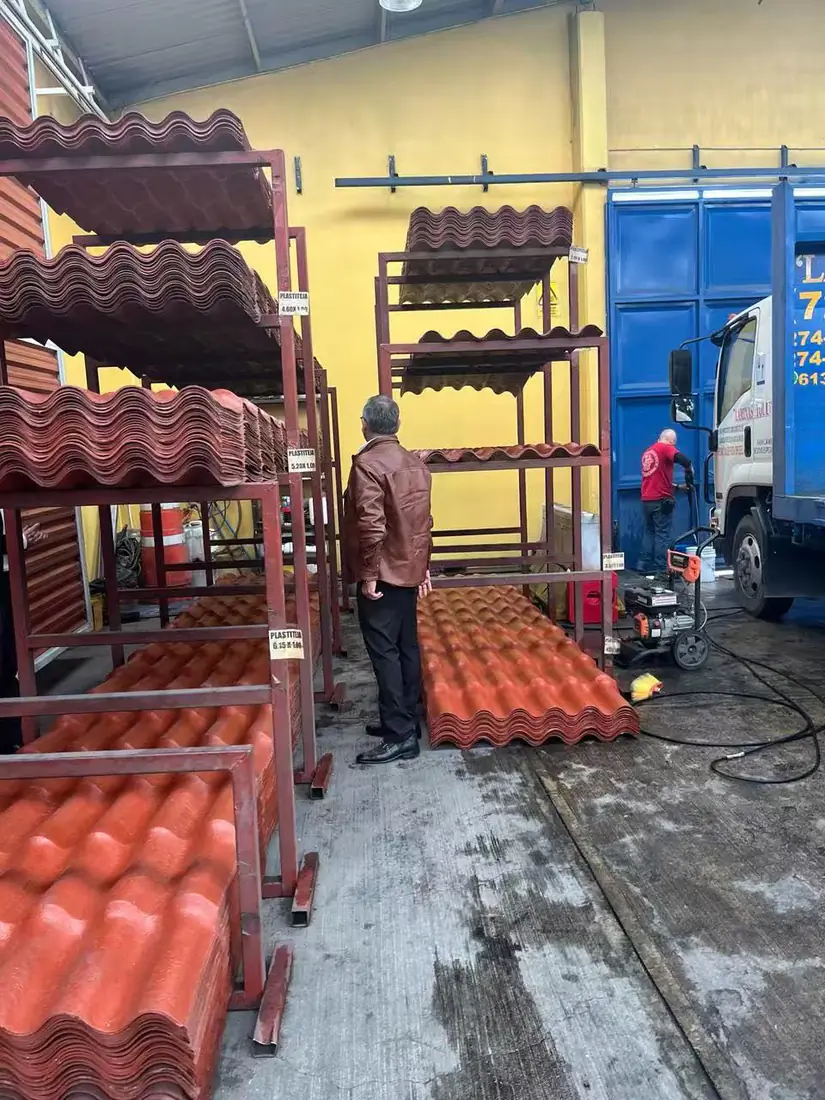
The completed line shown in the project photos includes the extrusion and downstream equipment installed in the customer’s factory, as well as batch-produced HDPE roof tiles, inspection samples and finished products prepared for storage and delivery.
Why HDPE Roof Tiles Are Much More Difficult Than PVC Roof Tiles
PVC roof tiles and HDPE roof tiles may look similar after forming, but their processing behavior is very different. HDPE is a semi-crystalline material with high shrinkage, a narrow processing window and relatively low melt strength. These characteristics make it much more difficult to maintain a complex corrugated roof tile profile during calibration and cooling.
The main technical challenges include:
1. Higher shrinkage and warpage
HDPE continues to shrink after leaving the die and during cooling. Uneven cooling between the thick wave crests, thin webs and tile edges can cause warpage, edge lifting or dimensional changes. PVC is amorphous and generally has more predictable shrinkage behavior, making profile control easier.
2. Lower melt strength
HDPE melt has lower resistance to sagging under its own weight. A wide roof tile with deep waves or stepped profiles can deform before it is fully supported and cooled. The die, calibration unit and supporting rollers must work together to stabilize the profile immediately after extrusion.
3. Narrow processing window
HDPE is sensitive to variations in melt temperature, pressure and cooling rate. Too much heat can cause sagging and surface defects; insufficient heat can lead to unmelted particles, rough edges or unstable pressure. The temperature balance is tighter than in many conventional PVC roof tile processes.
4. Difficult profile calibration
The complex roof tile shape contains several different thicknesses. If the vacuum, cooling water and haul-off force are not balanced, the product can distort, develop visible marks or fail to keep the required tile pitch and width.
5. UV and color stability
Brazil has strong sunlight and high UV exposure. HDPE roof tiles need UV stabilization, antioxidant and pigment systems that remain stable under outdoor conditions. Red terracotta pigments must also be dispersed evenly to avoid color streaks and surface defects.
6. Surface appearance
Customers expect a roof tile that looks like a traditional ceramic product. The texture, wave pattern and surface gloss must remain consistent across the full tile width and throughout a long production run.
What BENK Did for the Brazilian Project
The Brazilian project required more than supplying an extruder. BENK treated it as a complete product and process development project, from material evaluation to final production support.
Material and formulation review
BENK worked with the customer to review the HDPE grade, calcium carbonate loading, impact modifier, UV package, antioxidant and color masterbatch. The objective was to balance impact strength, stiffness, shrinkage, surface appearance and outdoor durability.
Screw and die optimization
The extrusion system was configured for HDPE processing, with attention to screw geometry, melt pressure, dispersion and temperature control. The die flow channels were reviewed to distribute the melt evenly across a wide roof tile profile. This is critical for HDPE because flow imbalance quickly becomes visible as thickness variation or wave distortion.
Calibration and cooling strategy
BENK adjusted the vacuum calibration and cooling sequence to control the roof tile shape step by step. The cooling curve was tuned to reduce internal stress and minimize warpage. The line was designed to support the tile as it left the die, preventing the low-melt-strength HDPE profile from sagging before it reached the calibration section.
Haul-off and synchronization
The traction system was matched to the tile wave profile to hold the product without crushing the crests or pulling it out of shape. Haul-off speed, cooling length and cutting cycle were synchronized to maintain stable dimensions and a clean cut.
Trial production and problem solving
The project involved repeated trial runs and sample inspection. BENK engineers reviewed tile width, pitch, wave height, edge quality, surface texture and flatness after cooling. Adjustments were made to temperature, vacuum, cooling, traction and formulation until the product reached a stable production condition.
Installation, commissioning and training
The project photos show the installed line in the customer’s factory. BENK supported commissioning, operator training and production handover, helping the customer move from initial trial production to batch manufacturing.
Project Result
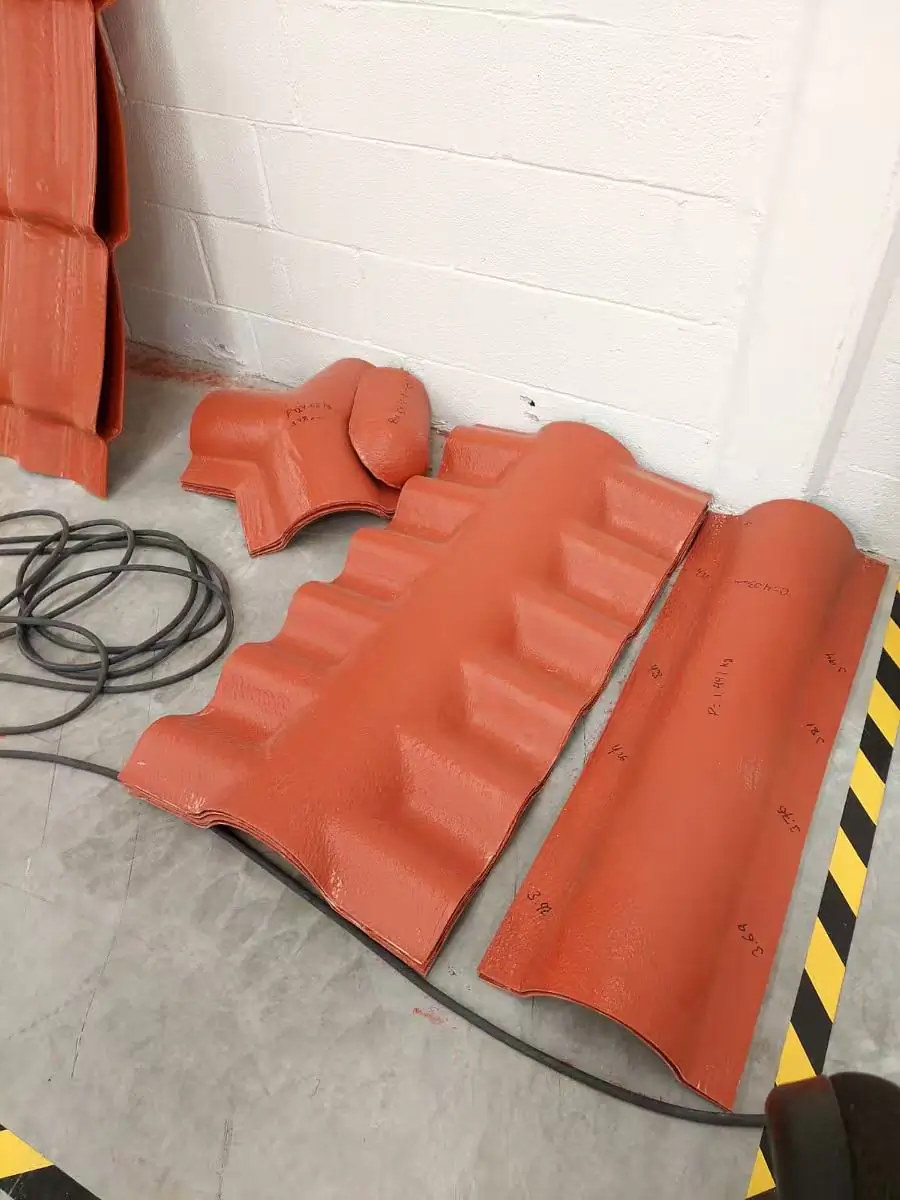
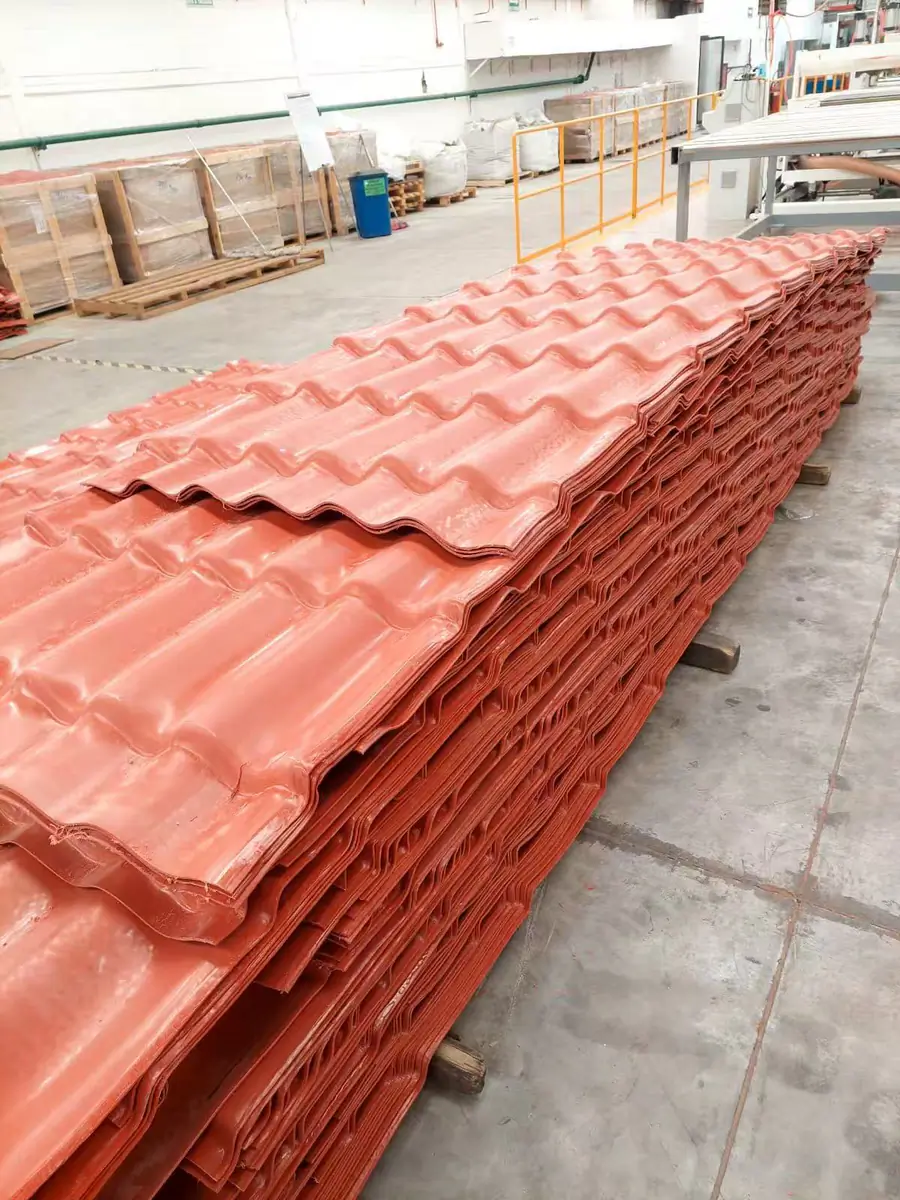
The Brazilian customer successfully produced red HDPE roof tiles with a terracotta appearance and a stable corrugated structure. The finished products were stacked, inspected and prepared for storage and delivery, demonstrating that the line and process could move from trial production to routine manufacturing.
The key result was not only a working extrusion line, but a repeatable process that combined:
- HDPE material formulation and UV protection
- Stable melt pressure and profile flow
- Vacuum calibration and controlled cooling
- Synchronized haul-off and cutting
- Consistent surface appearance and tile dimensions
- Higher impact resistance and weather resistance than many traditional roof tile materials
HDPE Roof Tile Product Advantages
HDPE roof tiles are gaining attention in Brazil and other tropical markets because they can offer:
- High impact resistance and resistance to cracking
- Good resistance to water, chemicals and corrosion
- Lightweight construction for easier transport and installation
- Recyclability and lower material waste
- A wide choice of colors and surface textures
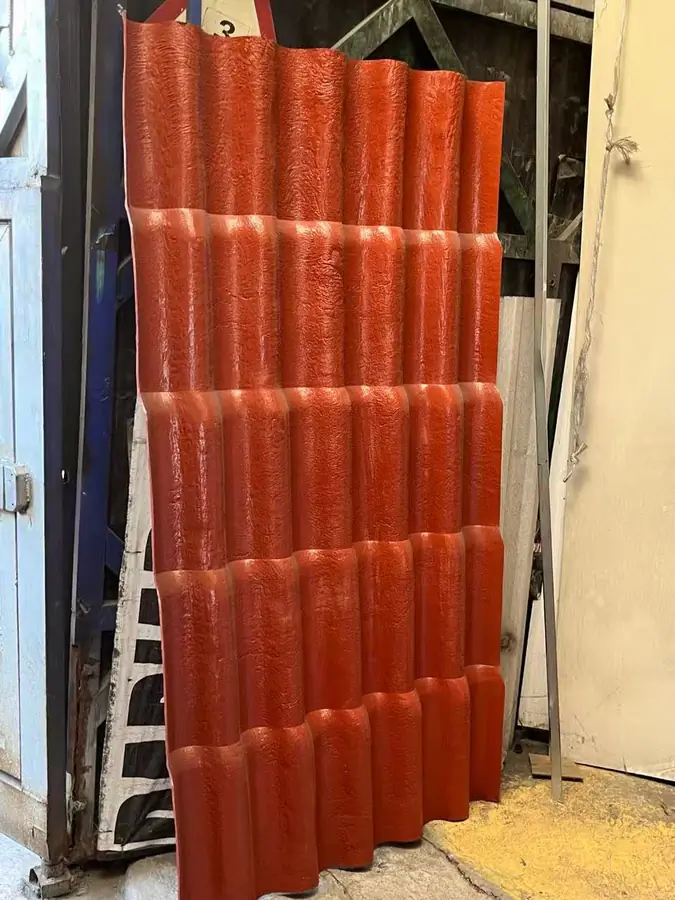
- A terracotta or wood-like appearance without the weight of traditional clay tiles
- Suitability for residential, agricultural, industrial and temporary buildings
Applications of HDPE Roof Tiles
Typical applications include:
- Residential roofing and renovation projects
- Agricultural buildings, greenhouses and livestock shelters
- Warehouses, workshops and temporary structures
- Industrial roofing and cladding
- Rain shelters, walkways and outdoor facilities
- Decorative roof projects requiring a clay-tile appearance
HDPE, PE, PVC and Other Plastic Roof Tile Solutions
BENK supplies extrusion lines for HDPE roof tiles, PE roof tiles, PVC roof tiles and other plastic roof tile products. Depending on the product structure and material, the line can be configured with single-screw or twin-screw extrusion, co-extrusion, online wave forming, vacuum calibration, haul-off, cutting and automatic stacking.
Related solutions include:
The same platform can also support corrugated plastic roof sheets, synthetic roof tiles, HDPE wave tiles, PVC roof tiles, ASA co-extruded roof tiles and lightweight roofing panels.