RTP Equipment
RTP Pipe Coiling Machine
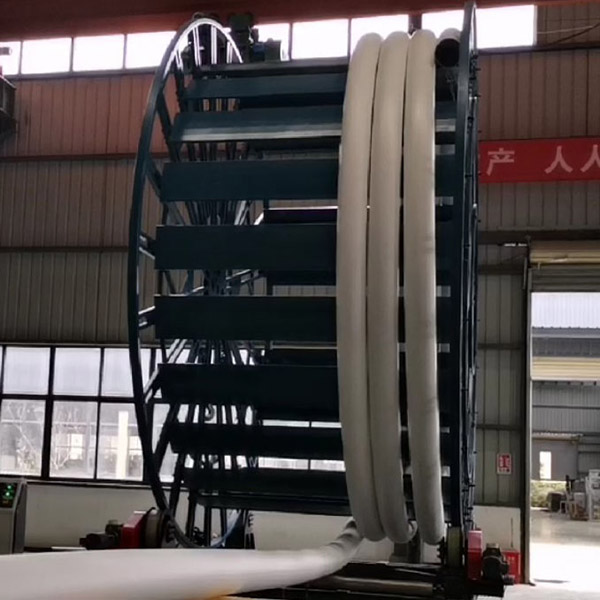
The coiler is the final handling step in an RTP line. It winds finished pipe into a controlled coil without exceeding the pipe’s minimum bend radius, kinking the liner or crushing the reinforcement. Coil geometry, tension and changeover are matched to the pipe size and project logistics.
What the coiler controls
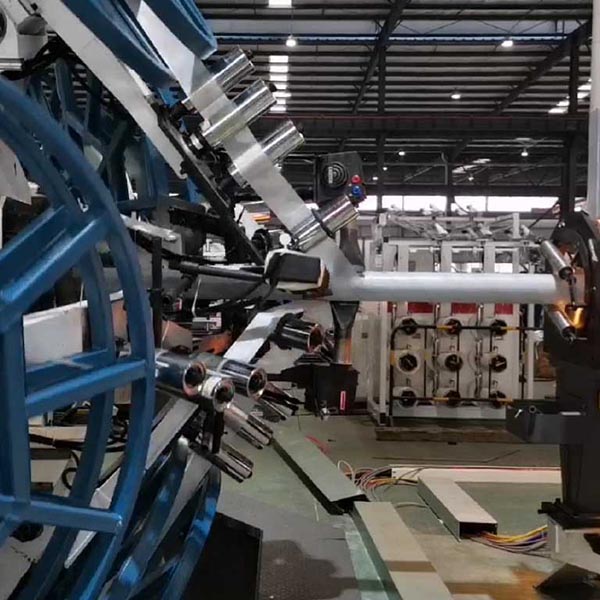
A finished RTP pipe is flexible but not a hose. The coiler must respect the minimum bend radius, avoid local point loads and keep the pipe from twisting. The control system coordinates rotation, traverse, tension and pipe support throughout the coil.
The frame and supports are sized for the coil weight and diameter range.
The pipe is laid in controlled passes so the coil builds evenly without gaps or crossings.
A dancer or load-cell system maintains the target tension as the coil diameter changes.
Optional cutting, end preparation and transfer equipment support a repeatable end-of-coil cycle.
Typical coil data
Coil dimensions are project-specific. The line can be configured for different coil sizes and handling methods, but the coiler must be matched to the pipe’s stiffness, minimum bend radius and weight.
- Coil inner diameter and width
- Maximum coil outside diameter and weight
- Pipe length per coil
- Minimum bend radius and allowable ovality
- End preparation and strapping method
- Lifting and transport method
Avoiding handling defects
Information needed for a coiler proposal
| Input | Details |
|---|---|
| Pipe range | Outside diameter, wall thickness, weight per metre and minimum bend radius |
| Coil specification | ID, OD, width, weight and pipe length per coil |
| Line speed | Normal and maximum haul-off speed |
| Handling | Lifting, pallet, strapping and packing requirements |
| Automation | Manual or automatic cut/transfer and data recording |
Coil geometry and pipe bend radius are design constraints. BENK confirms the coiler configuration and floor layout in the technical proposal.
Plan the coil before the line layout
Send the pipe range, coil dimensions and handling method. We will configure the coiler, tension control and line interface.