RTP Equipment
RTP Line Automation & Quality Control
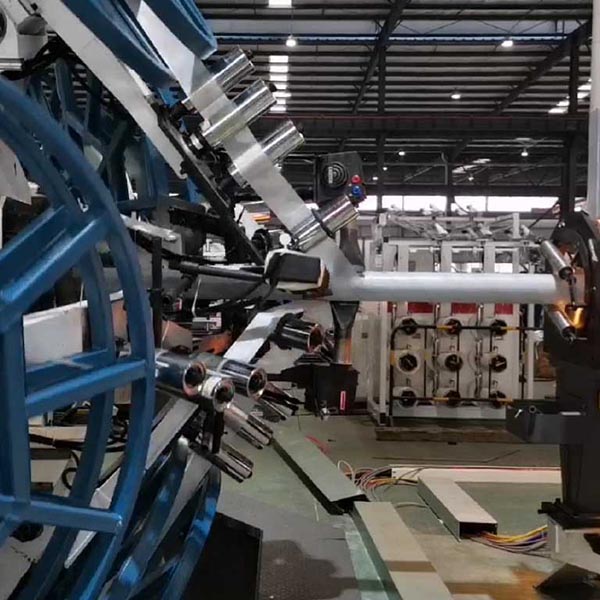
An RTP line only performs consistently when extruder, winder, heating, jacket, haul-off and coiler work as one process. BENK integrates line control, recipe management and production data so operators can repeat a qualified pipe design and trace what happened during the run.
What can be controlled and recorded
The exact scope depends on the line configuration. A typical control package can coordinate the main drives, capture operator inputs and trend critical process values. The goal is not to collect data for its own sake, but to make the qualified process repeatable.
Screw speed, melt pressure, temperatures, line speed and haul-off ratio.
Tape tension, winding angle, layer count, ring speed and recipe selection.
Zone temperatures, product temperature where measured, cooling flow and alarms.
Pipe length, coil number, coil weight and end-of-run records where the equipment supports them.
Quality control that fits the process
RTP quality depends on material, geometry and process history. A practical inspection plan usually combines inline measurements with laboratory and pressure testing. BENK can integrate selected gauges and data links, but the final test plan and acceptance criteria must match the pipe specification.
- Outside diameter and ovality
- Wall thickness and layer inspection
- Winding angle, layer count and tape tension records
- Process temperatures and line speed
- Coil length, weight and handling records
- Hydrostatic or other pressure tests specified by the project
Control-system scope
| Function | Typical implementation |
|---|---|
| Line control | PLC and HMI with coordinated drives, interlocks and alarm handling |
| Recipes | Parameter sets per pipe size and construction, with access control |
| Data logging | Trending and export of selected process values; scope agreed in the proposal |
| Inspection | Interface to selected diameter, wall-thickness or vision systems |
| Service | Remote diagnostics where network access and customer policy allow |
No control system replaces a qualified pipe design. Production records support traceability, but the pipe manufacturer remains responsible for material selection, fitting qualification and final product certification.
Make the qualified process repeatable
Tell us which line modules, gauges and data requirements you need. We will define a control architecture that fits the production team and maintenance plan.