RTP Equipment
RTP Reinforcement Winding Machine
A servo-controlled winding system for applying glass fibre, aramid, polyester or steel strip to a thermoplastic liner in a balanced helical pattern. The design focuses on stable tape tension, repeatable layer placement and fast recipe changeover.
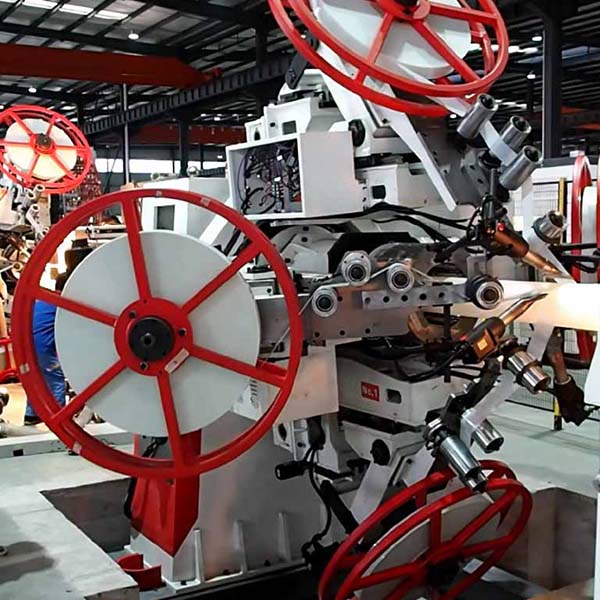
How the winding head works
The liner passes through the winding section while one or more pay-off stations feed reinforcement tape to the pipe. A rotating ring or carriage guides the tape to the required helix angle. The controller synchronizes pipe line speed, rotation speed, traverse position and tape tension so each layer is placed consistently.
The tape spool, brake, dancer roller and load cell maintain stable tension as the spool diameter changes.
Guide rollers position the tape at the correct width and angle, with adjustment for tape width and pipe diameter.
Servo axes control the winding ring, carriage or both, allowing repeatable patterns and recipe-based changeover.
Guarding, interlocks and controlled stop sequences protect operators during spool changes and maintenance.
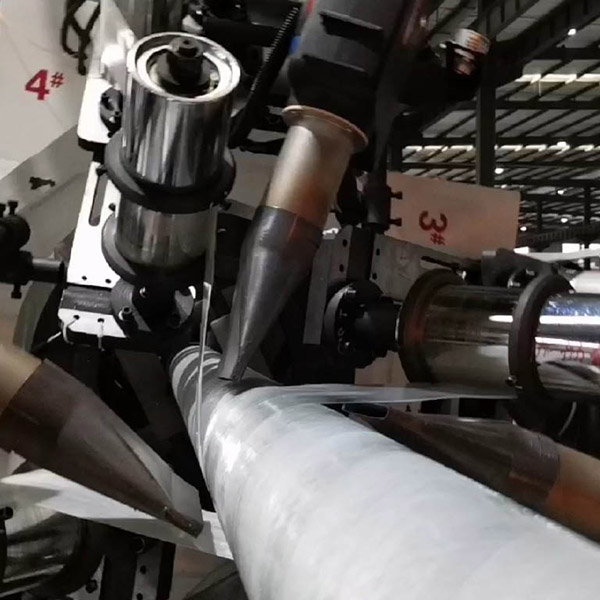
Reinforcement materials
The winding system is configured around the reinforcement material and the pipe qualification program. Material choice affects tape tension, guide geometry, heating and jacket bonding.
- Glass fibre tape or roving-based tape
- Aramid tape for high-pressure designs
- Polyester tape where the design permits
- Steel strip for specific pressure and handling requirements
- Other qualified tapes with project-specific testing
Material compatibility, tape width and layer sequence must be confirmed for each pipe design.
Typical specification inputs
| Parameter | What we need | Why it matters |
|---|---|---|
| Pipe range | Inside diameter, outside diameter and wall range | Sets ring size, guide position and line speed |
| Reinforcement | Tape type, width, thickness and layer count | Determines pay-off, tension and guide design |
| Winding pattern | Angle range, sequence and overlap | Defines servo motion and recipe structure |
| Output | Target kg/h or m/min | Sets acceleration, spool capacity and control response |
| Line interface | Liner extruder, oven, jacket line and haul-off data | Ensures synchronized start, stop and speed changes |
Winding angle is a design variable. A balanced angle near ±54.7° is common for pressure-balanced designs, but the final angle, layer count and tension must come from the pipe design and qualification testing.
Integration with the RTP line
Specify the winding machine around your pipe design
Send the pipe size range, tape data, layer pattern and target output. We will confirm the winding configuration, controls and line interface.