Partner Network · Field Notes
Before You Put Your Name Behind a Plastic Extrusion Line
A practical note for distributors, importers and technical representatives choosing a manufacturing partner.
By the BENK export engineering team · Zhangjiagang, October 2026
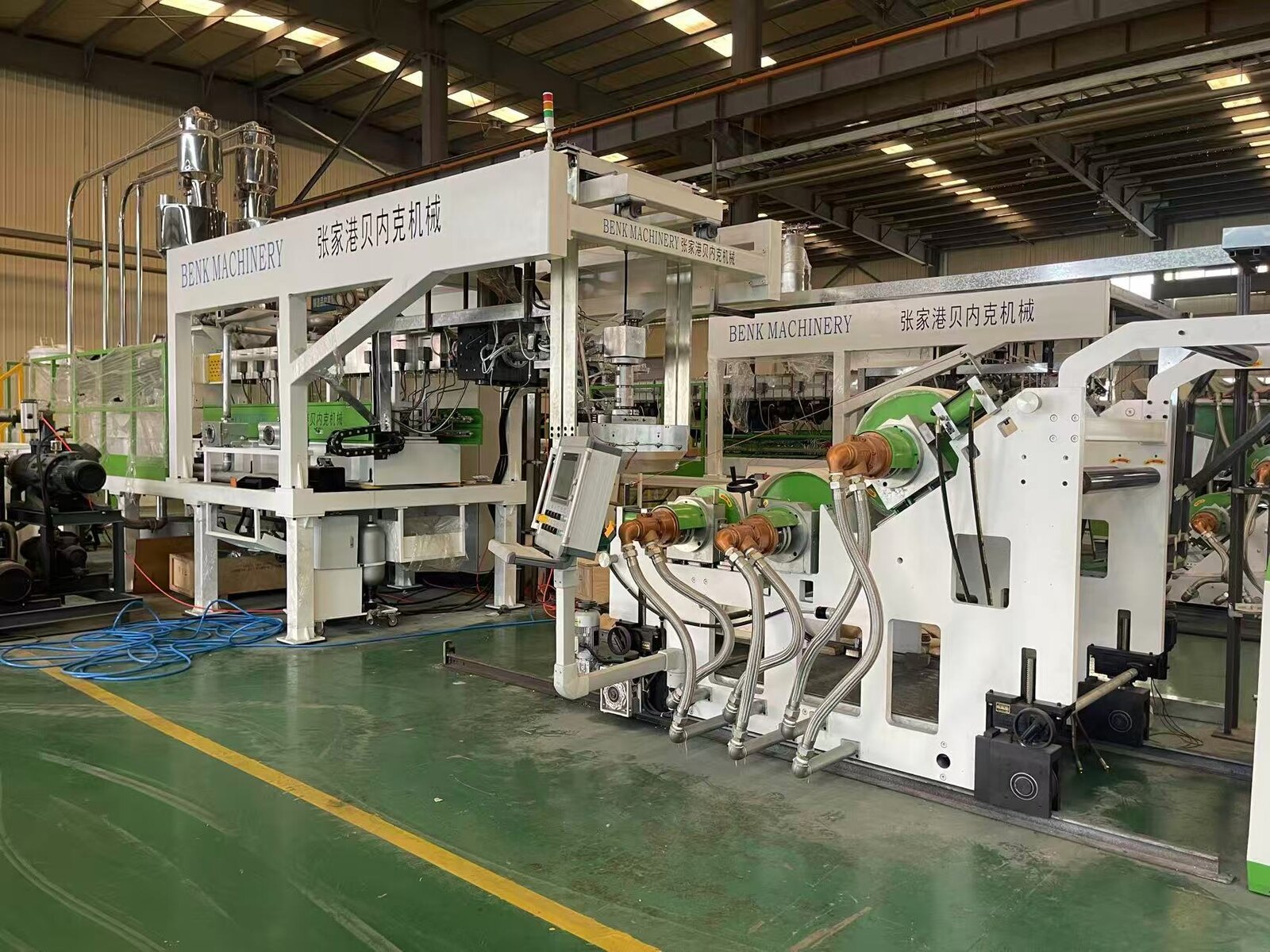
Two extrusion lines can look almost identical on a quotation. Screw diameter, motor power, line width, output. Then the first production shift begins, and the differences show up somewhere else: how quickly the line settles, how easily an operator can trace a fault, whether a spare part has a clear part number, and who answers when the product drifts out of tolerance.
A local partner usually sees those differences first.
What the quotation does not show
A processor does not buy an extrusion line in isolation. They buy a way to make a product at a cost that works in their market. That sounds obvious until the details start to move.
The same material can behave differently from one batch to the next. A workshop may have less cooling water than expected, or a voltage supply that is not quite what the catalogue assumed. A customer may have experienced operators but no spare-parts store, or a new team that needs more training than the purchase plan allowed for.
These are not unusual problems. They are the normal work of putting a machine into a real factory.
For a plastic extrusion machinery distributor or agent, this is the difficult part of the job. They are close enough to hear the problem, but not always close enough to the factory to solve it alone. Language is only one part of the translation. A good local representative also translates the customer’s product, raw material, service habits and commercial expectations into questions the manufacturer can answer.
Two lines may both be sold as a PVC pipe production line. One may be intended for small drainage pipe with high cavity count; another for larger pressure pipe where wall thickness and dimensional stability matter more. Both descriptions are correct. The process is not the same.
The same is true across the wider range of plastic extrusion equipment. A WPC door panel line, a PVC foam board line and a PP hollow sheet line all involve extrusion, but their dies, calibration, cooling, haul-off and cutting details follow different product logic. If the manufacturer only asks for a machine model, someone further down the line will have to solve the missing questions.
The local partner carries more than territory
An agent is often the first person to visit the plant, read the utility drawing, look at the available floor space and explain why a particular configuration may not suit the product.
That work matters before a quotation is issued. It also matters after the line is running. When output falls or surface quality changes, the customer usually calls the local contact first. If that contact has no direct route to an engineer, a small technical issue can turn into a long commercial one.
A useful manufacturer should make that route easy. Not through a general sales inbox that answers every question with a brochure, but through people who can discuss screw design, die flow, cooling length, haul-off force and control settings without guessing.
It also helps when the manufacturer is clear about what it does not do. A partner can defend a considered recommendation. It is much harder to defend a promise that was made only to win the order.
Where BENK fits
BENK has been building extrusion equipment in Zhangjiagang since 2004. The city is one of China’s main plastics machinery clusters, but the more important part of that sentence is the work inside the workshop.
We are an extrusion equipment manufacturer, not a trading company. Our six product families are each handled by a dedicated specialist engineering team, covering pipe and irrigation, sheet, board and panel, profile and door, film, recycling and pelletizing, and extruders, mixing and auxiliary equipment. The work can begin with a single extruder or extend to a full turnkey plastic production line. That range is useful, but only when it is matched to a real market and a real product.
Our engineers start with the product drawing: material and formulation, dimensions, target output and available floor space. From there we prepare a line proposal, layout drawing and spare-part list, long before an order is placed. Every line is assembled, wired and trial run in our Zhangjiagang workshop. If something needs adjustment, we would rather find it here than have a partner explain it at the customer’s plant.
That is also why we are cautious about saying yes to a specification we have not checked. A quick order is not worth a line that struggles through its first year.
What we ask before we quote
A useful quotation starts with more than a product name. The questions we need answered are usually straightforward:
- What is the final product, and where will it be sold?
- Which material or formulation will be used, including recycled content or filler?
- What dimensions and tolerances are required?
- What output is realistic for the local market and operating pattern?
- What voltage, frequency and utility conditions apply?
- How much floor space is available, and what layout constraints exist?
- Who will install, operate and maintain the line?
- Which spare parts should be available locally?
These answers allow us to size the extruder, die, calibration or forming section, cooling, haul-off, cutting and controls as one system. They also show where the scope should stop. If the information is incomplete, we say what still needs to be confirmed rather than filling the gaps with assumptions. If the answers are vague, the quotation will be vague too. We would rather spend another day on the details than discover the gap during commissioning.
A customer may be comparing three suppliers and three prices. A distributor needs more than a price to make that comparison useful. They need to know what is included, what is optional, what has been tested and what will be needed on site.
Price matters, of course. But the lower quotation is not necessarily the lower cost. Energy use, start-up scrap, downtime and the price of a spare part six months later all belong in the same calculation. A line that runs cheaply on paper but consumes more power, wastes more material or waits longer for a part is not cheap for very long.
What a partner should expect from us
A local partner should not have to guess which drawing is current, or wait two days for confirmation of a motor voltage. Direct access to the people who configure and build the line matters more than a friendly account manager.
Scope should be equally clear. What is standard, what is optional, which electrical standard applies, and what the customer must provide on site should all be written down before the order turns into a discussion about assumptions.
Before shipment, we prefer evidence to assurances. Lines are assembled, wired and trial run in our workshop. Depending on the project, a partner or customer can review trial video, operating records and gauge data, or attend the factory acceptance test. Machines are CE marked where applicable, and our quality management system is certified to ISO 9001:2015.
Spare parts deserve their own conversation. A list is not a support system. Each recommended part needs a clear name, number and ordering route, otherwise the local team cannot act quickly when something fails.
After delivery, our engineers can support installation, commissioning, operator training and remote diagnosis. The aim is to leave the customer with a line their team can run, not just a machine that worked in Zhangjiagang.
A product range only helps when it fits the market
BENK’s portfolio covers pipe and irrigation systems, sheet and board lines, profile and door lines, film extrusion, recycling and pelletizing, and the extruders and auxiliaries around them.
For a local partner, that range can create several routes into the same customer base. A company that begins with a PVC pipe project may later find demand for an HDPE pipe extrusion line, a PPR pipe line, corrugated pipe or drip irrigation equipment. A customer working with construction materials may move from PVC profiles and a WPC door panel production line to foam board or decorative panels. Packaging converters may ask about a PET sheet extrusion line, PP hollow sheet production line or PP formwork board.
The key is not to sell everything at once. It is to understand which application is growing in that market and build the technical conversation around it.
A distributor who knows the local processing community can often see that demand before a factory does. They know which customer is serious, which application is growing, and which service promise will be tested six months after installation. That local knowledge is hard to replace with a website. The manufacturer’s job is to give it a clear, honest product scope and the engineering support to use it well.
A note for distributors, importers and technical representatives
Some of the most useful conversations we have are not with end users. They are with companies that already sell machinery, components or technical services in their market and are looking for a manufacturing partner they can represent.
Some readers will be processors. Others will be importers looking for a plastic extrusion machinery supplier in China, technical companies considering a local agency, or distributors wanting to add a complementary range. The label matters less than the fit.
A first conversation is more productive when we understand:
- your country or region;
- the customer segments you already serve;
- the product lines you are considering;
- your technical and after-sales capability;
- whether you want to start with one line or build a broader portfolio.
We do not need a signed agreement to have that first discussion. We need a clear picture of the market and an honest view of what each side can support.
If you are already working with plastics processors, write to us at kpm@benkpm.com with the subject line “Local partner – [country]”. Tell us what your customers are asking for. That is usually enough to start.
Zhangjiagang City BENK Machinery Co., Ltd.
- Email: kpm@benkpm.com
- Telephone: +86 512 5896 1463
- Mobile / WhatsApp / WeChat: +86 159 5096 2426
- Website: www.benkpm.com
- Address: No.20 Huatang Road, Economic Development Zone (South District), Zhangjiagang City, Jiangsu Province, China
FAQ
How can a company become a local agent for plastic extrusion machinery?
Start with the market rather than the title. Manufacturers usually want to understand the territory, the customers you already serve, your technical support capability and the service model you can offer. A first conversation can focus on those points before territory or commercial terms are discussed.
What should a plastic machinery dealer or distributor look for in a China supplier?
Look beyond the initial price. Ask any potential plastic extrusion line supplier how it handles material and formulation questions, factory testing, documentation, electrical standards, installation support, operator training and spare parts. A supplier that can explain its limits clearly is often easier to build a long-term business with.
Can a local partner represent pipe, profile and sheet machinery from one manufacturer?
It can work well when the portfolio matches local demand and the partner has enough technical support to handle several applications. In some markets, a focused pipe or profile range is the better starting point. In others, a broader range creates useful cross-selling opportunities.
What information does BENK need to prepare an extrusion line proposal?
The final product, raw material or formulation, product dimensions, target output, local voltage and plant layout are the essential starting points. Details about operator experience, maintenance capability and planned upgrades help refine the configuration further.