WDP-09 · Fire performance
Fire Retardant WPC Door Panel Production Line: Test the Formula and the Process Together
A fire-retardant additive is only one part of the result. If it is poorly dispersed, overheated or unevenly distributed, the panel may not perform as expected, no matter what the formula sheet says.
Technical review: BENK Machinery · Updated 6 November 2026

Fire performance is one of the least forgiving WPC door panel requirements. The target standard, panel thickness, core design, surface finish and hardware all affect the result. The extrusion line has to deliver a consistent compound before any laboratory test can be meaningful.
This page is for buyers developing a fire-retardant WPC door board for hotels, commercial interiors, public buildings or markets with specific reaction-to-fire requirements.
The formulation and the line cannot be separated
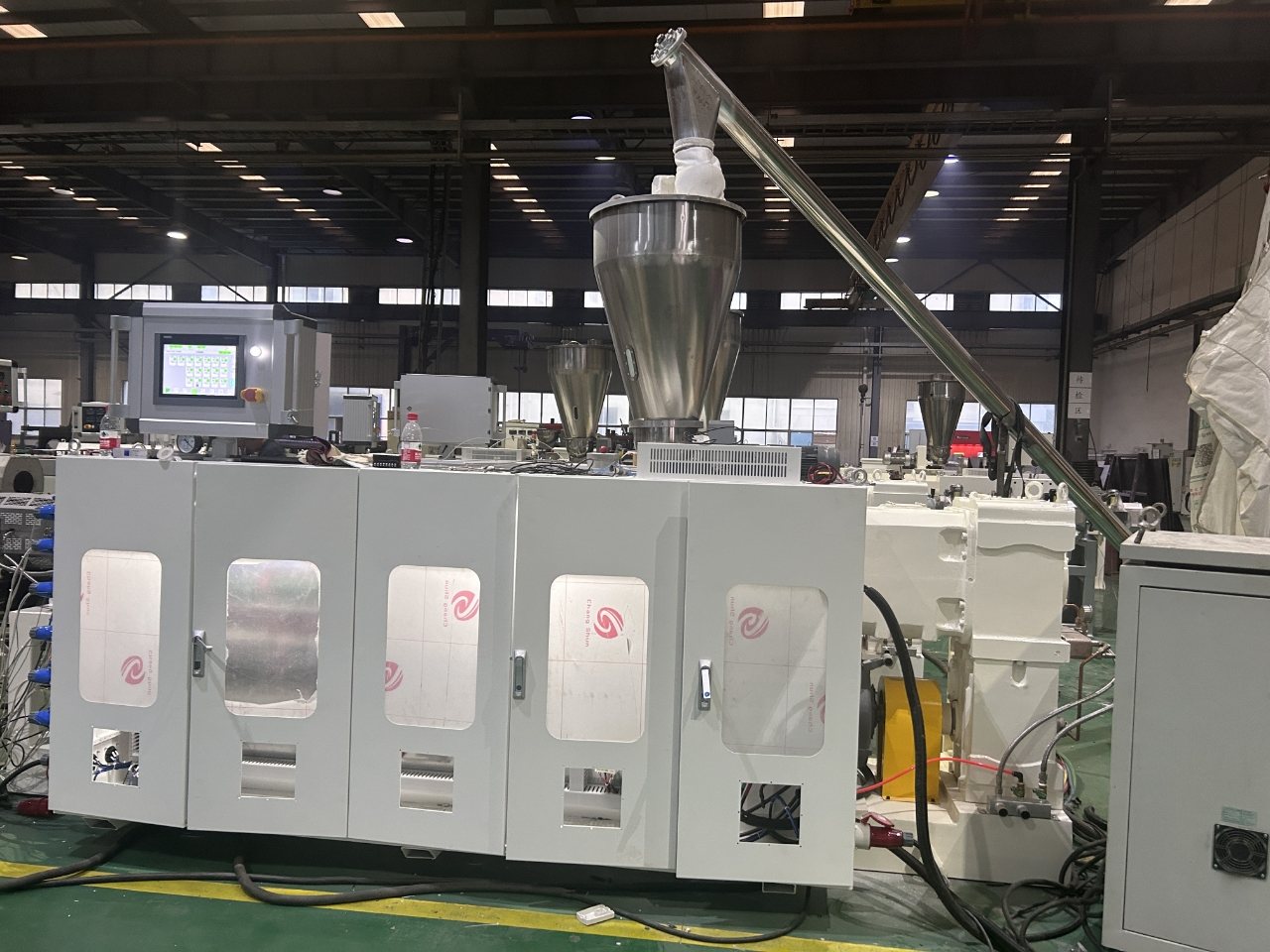
Fire-retardant additives can change viscosity, melt temperature and die flow. A compound that works in a small mixer may run differently in a production extruder. Poor dispersion can create local zones with less additive, while excessive heat can degrade the additive or the polymer.
The line should be selected around the approved formulation, not adjusted after the machine arrives. Screw geometry, feeding, venting and temperature control all need to be reviewed together.
- Additive agglomeration or poor dispersion
- Melt temperature above the safe window
- Uneven additive distribution across the panel
- Surface defects from high filler loading
- Test samples that do not represent production board
What a production trial should prove
The trial should show that the line can run the fire-retardant compound at a stable output and produce a panel with the intended section and surface. Samples should be taken from different points in the run, not from one carefully chosen board.
The buyer should then send representative samples to an accredited laboratory using the standard required in the destination market. A supplier's internal burn test can be useful for development, but it does not replace formal market compliance.
How BENK supports a fire-retardant project
BENK reviews the additive package, target loading, panel section and output with the buyer. The extruder and die may need a different screw, venting or temperature strategy from a standard WPC door board line. The downstream equipment also has to handle the higher filler load without marking the surface.
BENK does not issue the final fire certificate. The responsible route is a joint trial, representative sampling and testing to the relevant standard. Once the formulation is fixed, the line settings can be locked into the production SOP.
- Screw and barrel review for the additive package
- Feeding and dispersion strategy for the target loading
- Temperature control to protect the formulation
- Surface and edge inspection at production speed
- Sampling plan for accredited testing
Production sequence
From material preparation to finished panel
- 01
Define the market standard
Confirm the reaction-to-fire test required in the destination market.
- 02
Approve the formulation
Review the additive package, loading and processing window.
- 03
Select the line setup
Match screw, venting and temperature control to the compound.
- 04
Run a dispersion trial
Check pressure stability and additive distribution.
- 05
Produce representative panels
Collect samples across the run, not from one board.
- 06
Test externally
Send samples to an accredited laboratory using the agreed standard.
- 07
Lock the production window
Record the approved formulation and line settings.
Reference window
Reference specification and planning range
The figures below are a starting point for discussion. The final line specification should follow the approved panel drawing, material formula and trial result.
| Mục | Reference / planning note |
|---|---|
| Target standard | Defined by the destination market and application |
| Mẫu | Fire-retardant additive package confirmed with the material supplier |
| Máy đùn | Screw, venting and temperature strategy reviewed for the compound |
| Panel range | Width and thickness confirmed with the door designer |
| Thử ra | Representative production samples tested by an accredited laboratory |
| Tài liệu | Formula, line settings and test report kept together |
How BENK fits the project
Where the BENK line supports the result
BENK can configure the extrusion line around a fire-retardant WPC formulation and provide representative production samples for the buyer's testing programme. Final fire performance must be confirmed by the relevant accredited test.
Buyer checklist
What to settle before you compare quotations
- Do not accept a fire claim based only on a compound data sheet.
- Confirm the exact test standard, panel thickness and mounting method.
- Take samples from the start, middle and end of the production run.
- Check whether the surface finish or lamination affects the tested result.
- Keep the approved formulation and line settings under version control.
Questions buyers ask
WPC door panel line FAQ
Can BENK guarantee a fire rating?
No. The rating depends on the complete formulation, panel construction and test standard. BENK supports the production trial and sampling, while certification is issued by an accredited laboratory.
Will a fire-retardant additive reduce output?
It can change melt viscosity and pressure. The extruder, die and cooling setup may need adjustment to keep a stable output.
Why test panels from different parts of the run?
Additive dispersion and process conditions can vary during production. Samples from different points show whether the line is stable.
Does lamination affect fire performance?
It can. The film, adhesive and surface build-up should be included in the test sample if they are part of the finished door.
Project brief
Tell us the panel, not just the machine.
Send the panel drawing, material formula, target output and factory location. BENK can then review the line configuration against the actual product.