WDP-05 · Frames and profiles
WPC Door Frame Profile Production Line: Make the Door and Frame Work as One System
A door panel can be flat and strong and still fail at installation if the frame is twisted, undersized or difficult to assemble. Frame profiles deserve their own production plan.
Technical review: BENK Machinery · Updated 6 November 2026
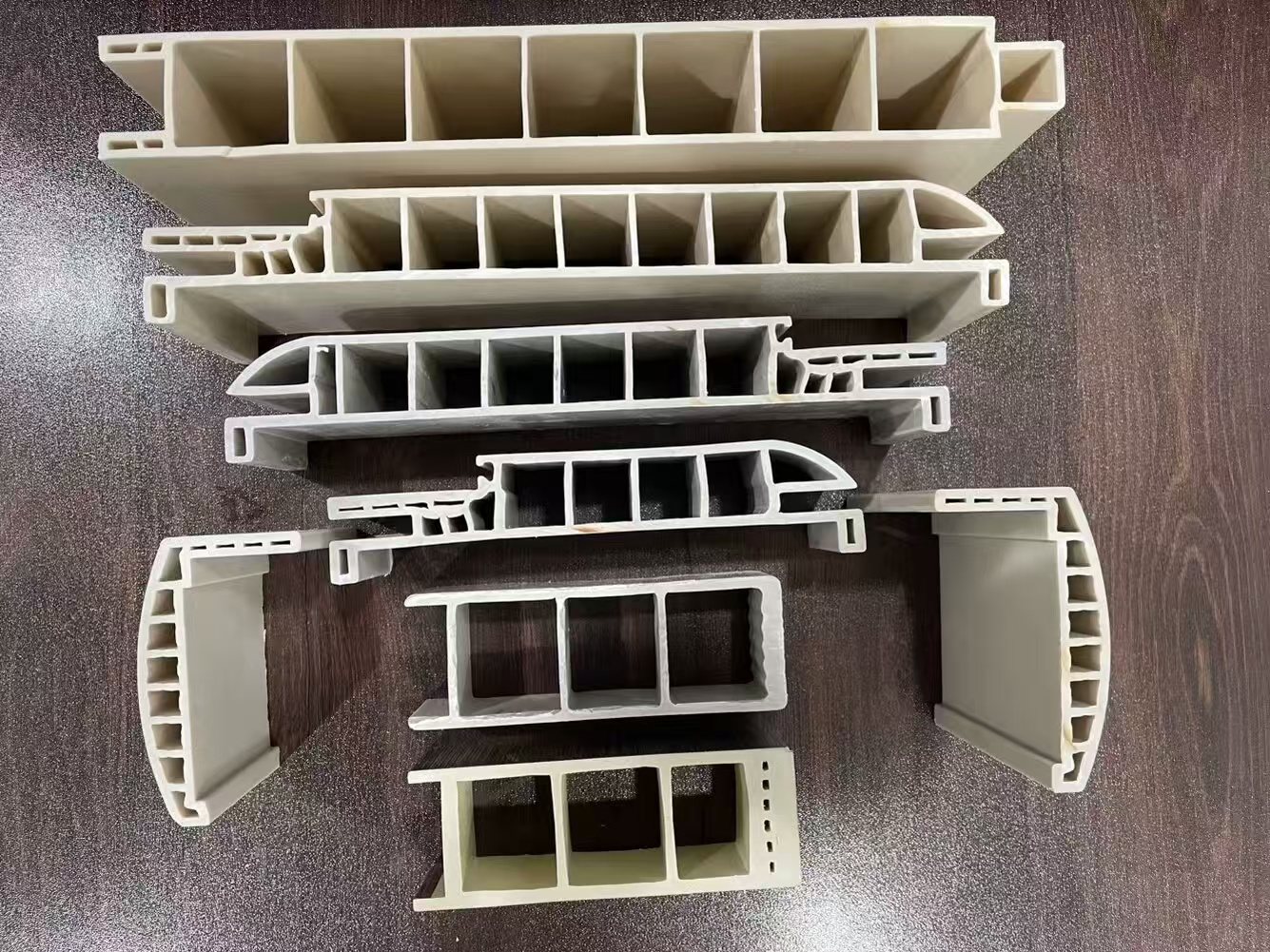
Door frames, architraves and cover profiles are smaller than the panel, but they carry many of the installation tolerances. A profile that cools unevenly can bow after cutting. A frame with an inconsistent wall section can make hinges difficult to align or leave a poor joint at the mitre.
This page explains what a WPC door frame profile production line needs to control and how the same extrusion platform can support a more complete door system.
What makes a frame profile different from a panel
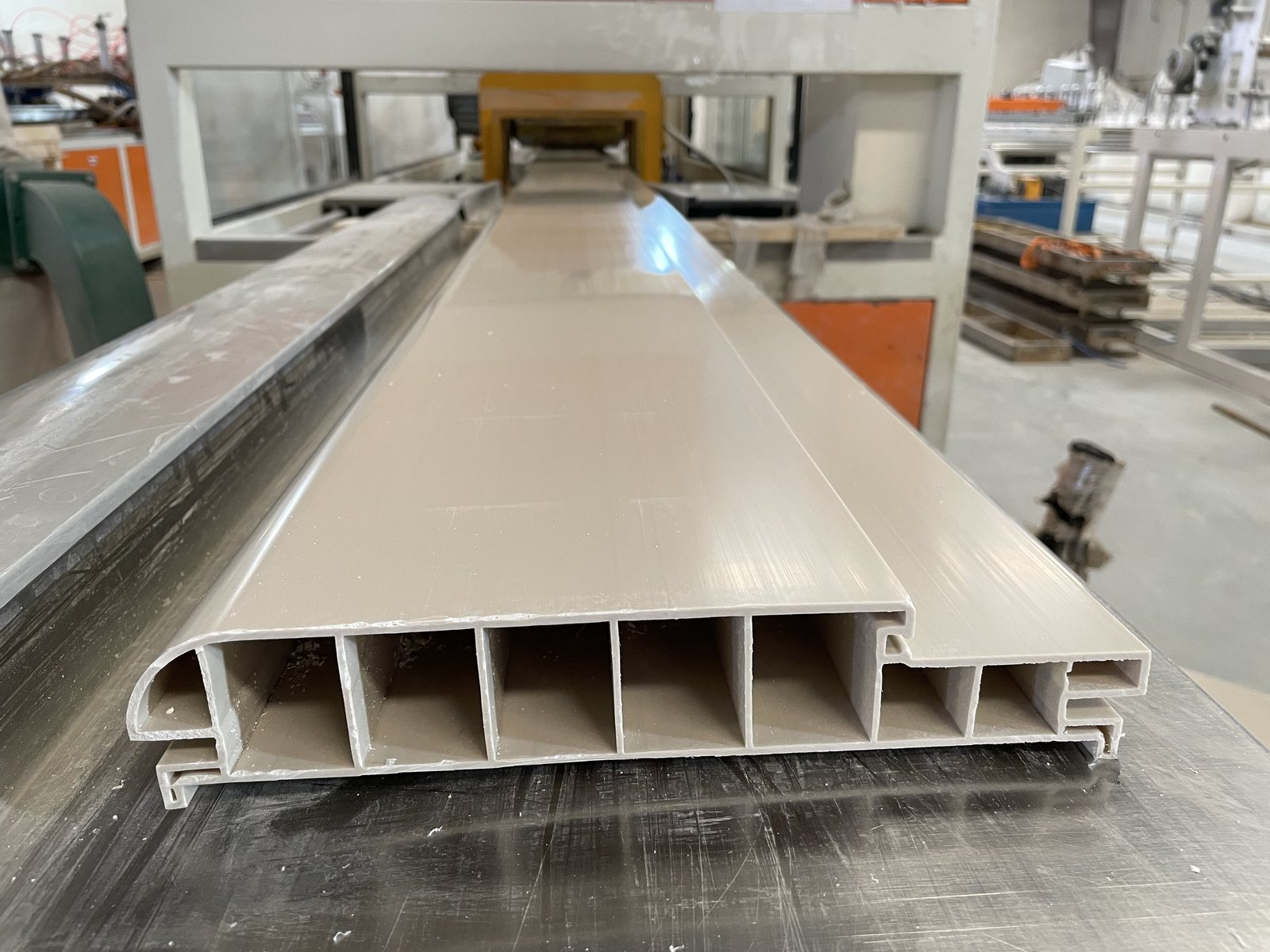
Frame profiles have thin walls, complex surfaces and often a visible decorative face. They run at different line speeds from thick door boards, and the cooling distance can be shorter. The die and calibration tooling need to suit those smaller details.
The profile also has to fit the panel, seal, hinge and wall opening. Production should therefore start from the assembled door system, not from a generic profile drawing. Small changes to the frame rebate can affect the whole installation.
- Frame rebate and panel clearance
- Wall thickness at hinge and lock points
- Architrave joint and mitre quality
- Surface finish on visible faces
- Straightness after cutting and packing
Using one extrusion platform for several profiles
A WPC profile line can run door frames, cover profiles and other PVC profiles when the screw, die and downstream equipment are compatible. The changeover is not only a mould swap; temperature and haul-off settings have to suit the new cross-section.
BENK notes that running PVC profiles on a WPC door line is possible with a mould change, although power consumption may be less efficient for some profile runs. That is a practical point for factories planning a mixed product list.
How BENK covers the door frame side
BENK supplies WPC door frame and cover manufacturing equipment alongside the main door-board line. The exact line can be built around the frame drawing, architrave design and expected output, with a separate downstream arrangement where the profile length or handling differs from the panel.
For a new factory, the useful approach is to plan the panel and frame lines together. Shared material preparation, utilities and packing can reduce the learning curve, while the profile line remains flexible enough to add another section later.
- Frame and cover profile dies based on approved drawings
- Cooling and calibration matched to the smaller section
- Haul-off and cutter sized for profile length
- Surface protection for visible decorative faces
- Packing plan that protects straightness in transit
Production sequence
From material preparation to finished panel
- 01
Approve the assembled door detail
Check the frame, panel, seal and hardware fit.
- 02
Define the profile drawing
Confirm wall sections, rebate and visible faces.
- 03
Select the extruder and die
Match output and screw design to the WPC compound.
- 04
Calibrate the profile
Hold the section while it cools without marking the surface.
- 05
Cut and inspect
Check length, squareness and straightness.
- 06
Assemble a sample
Fit the profile to a panel and hardware set.
- 07
Approve packing
Protect the visible face and keep profiles straight during storage.
Reference window
Reference specification and planning range
The figures below are a starting point for discussion. The final line specification should follow the approved panel drawing, material formula and trial result.
| Butir | Reference / planning note |
|---|---|
| Material | PVC or WPC profile compound according to the product |
| Product scope | Door frames, cover profiles, architraves and compatible PVC profiles |
| Ekstruder | SJZ series options according to section and output |
| Changeover | Die and downstream settings reviewed for each profile |
| Quality checks | Section dimensions, straightness, surface and assembled fit |
| Integrasi garis | Can be planned with a WPC door panel line for a complete door system |
How BENK fits the project
Where the BENK line supports the result
BENK can supply WPC door frame and cover production equipment as a separate line or as part of a wider door-system project. The profile drawing and assembled fit should be confirmed before the die is made.
Buyer checklist
What to settle before you compare quotations
- Send the frame drawing with the intended panel thickness and seal detail.
- Ask for an assembled sample, not only a loose profile.
- Confirm the visible face protection method for packing.
- Review haul-off clamping so the decorative surface is not marked.
- Plan storage racks that support long profiles and prevent bowing.
Questions buyers ask
WPC door panel line FAQ
Can the same extruder make door boards and frames?
It may be possible when the screw, die and downstream equipment are compatible. The practical changeover, output and power use should be reviewed for each product.
What is the most important frame dimension?
The rebate and overall depth need to match the panel, seal and wall opening. A sample assembly is the best way to confirm the relationship.
How do you prevent frame profiles from bowing?
Use balanced cooling, correct haul-off support and a straight packing method. Cutting a profile before it has stabilised can also create problems.
Can BENK supply architrave profiles too?
Yes, architrave and cover profiles can be reviewed with the frame drawing. Each section needs its own die and downstream settings.
Project brief
Tell us the panel, not just the machine.
Send the panel drawing, material formula, target output and factory location. BENK can then review the line configuration against the actual product.