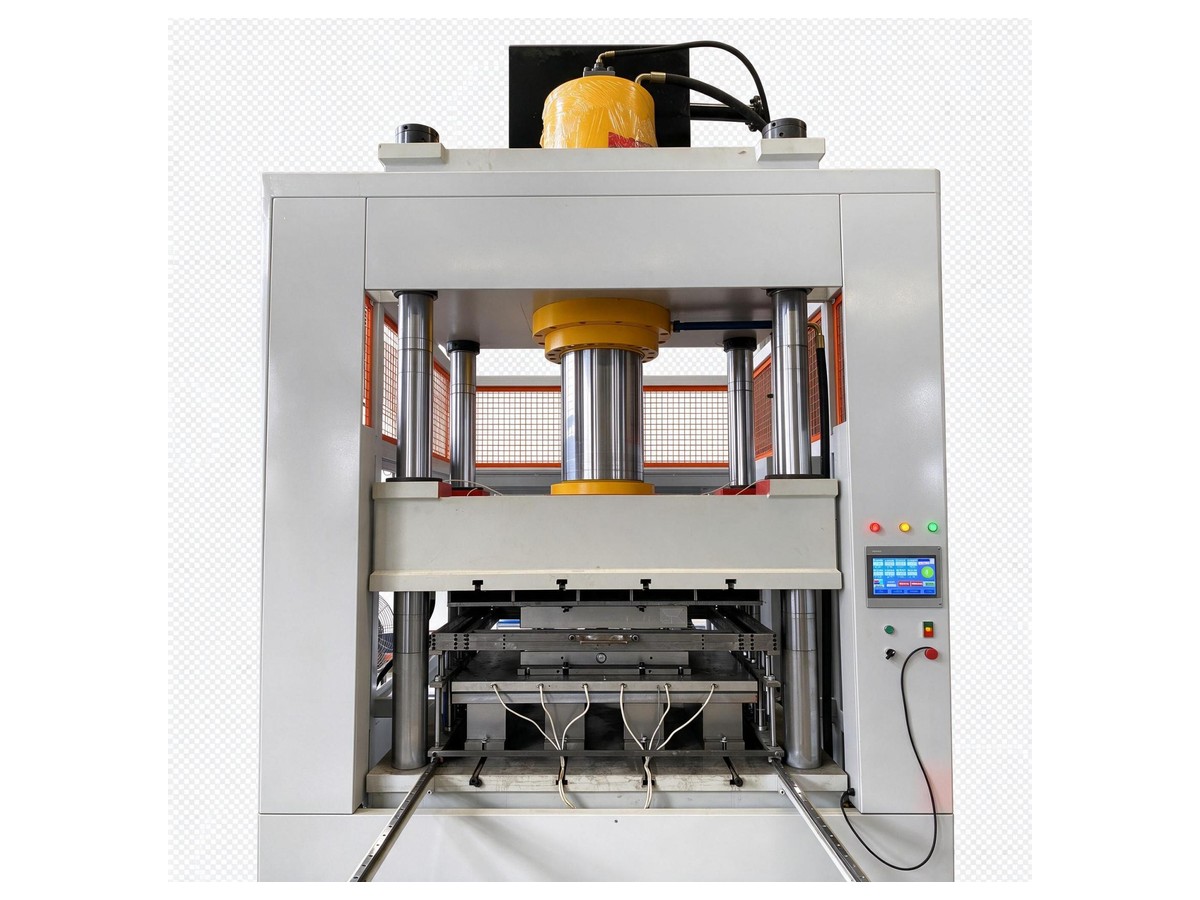
Automotive Interior High-Pressure Forming Machine
A high-pressure forming system for automotive interior trim and acrylic composite parts that need tight mold contact and controlled wall thickness.
What this BENK configuration is designed to solve
Automotive interior parts often combine deep draws, visible surfaces and composite sheet constructions. The high-pressure forming machine uses positive air pressure, vacuum and hydraulic molding to press the softened sheet against the tool. This helps avoid leakage during forming and supports a more uniform material distribution than a simple vacuum draw on difficult parts.
Where it fits in production
A project-specific machine for automotive trim suppliers that can provide a validated tool, material specification and production acceptance criteria.
Key system features
Positive air high-pressure forming
Air pressure is used with vacuum to push the sheet into detailed mold geometry.
Air booster and hydraulic system
The forming force is generated through a booster and hydraulic arrangement designed for the part.
Thickness consistency focus
Pressure-assisted mold contact supports more uniform material distribution on demanding shapes.
Robot-ready production flow
The machine can be reviewed with a robot handling system for automated loading and take-off.
Tipe aplikasi
Materials and process compatibility
Specifications to confirm before the machine is frozen
Model names identify a catalog starting point. Final performance and dimensions must be tied to the approved material, tool and acceptance plan.
| Planning item | BENK review guidance |
|---|---|
| Typical role | High-pressure forming of automotive interior parts |
| Membentuk metode | Positive air pressure, vacuum and hydraulic molding |
| Material | Automotive acrylic composite or approved alternative |
| Otomatis | Robot handling interface available by project |
| Tooling | Customer mold or new tooling reviewed separately |
| Validation | Dimensional, appearance and cycle criteria agreed before build |
Configuration options to discuss with BENK
Options are selected only where they support the product, tool and production workflow.
- Robot loading and unloading interface
- Mold temperature control
- Forming recipe management
- Part marking and traceability
- Safety enclosure matched to plant standards
From process review to factory trial
Practical questions before requesting a quotation
Why use high pressure instead of vacuum only?
For some deep or visually demanding parts, pressure-assisted contact improves mold detail and helps control thickness distribution. The benefit should be proven with the actual material and tool.
Can existing molds be used?
They may be usable after inspection. Mold condition, vacuum ports, sealing, cooling and pressure compatibility must be reviewed.
Is this only for acrylic composites?
The source description focuses on automotive acrylic composites, but other approved thermoformable sheets can be reviewed by engineering.
Continue comparing BENK solutions
Use the related pages to compare process methods, feeding requirements and downstream options.
Specify the part before you specify the machine
Email the product drawing, material data, sample photos, target output and plant voltage to BENK. Include any existing mold or tooling information.