
WDP-14 · Hot and humid markets
Tropical Climate WPC Door Panel Production Line: Design for Heat and Humidity, Not Just the Lab
A panel that meets specification in a cool trial room can behave differently after a week in a humid warehouse. In tropical markets, the factory environment is part of the process.
Technical review: BENK Machinery · Updated 6 November 2026
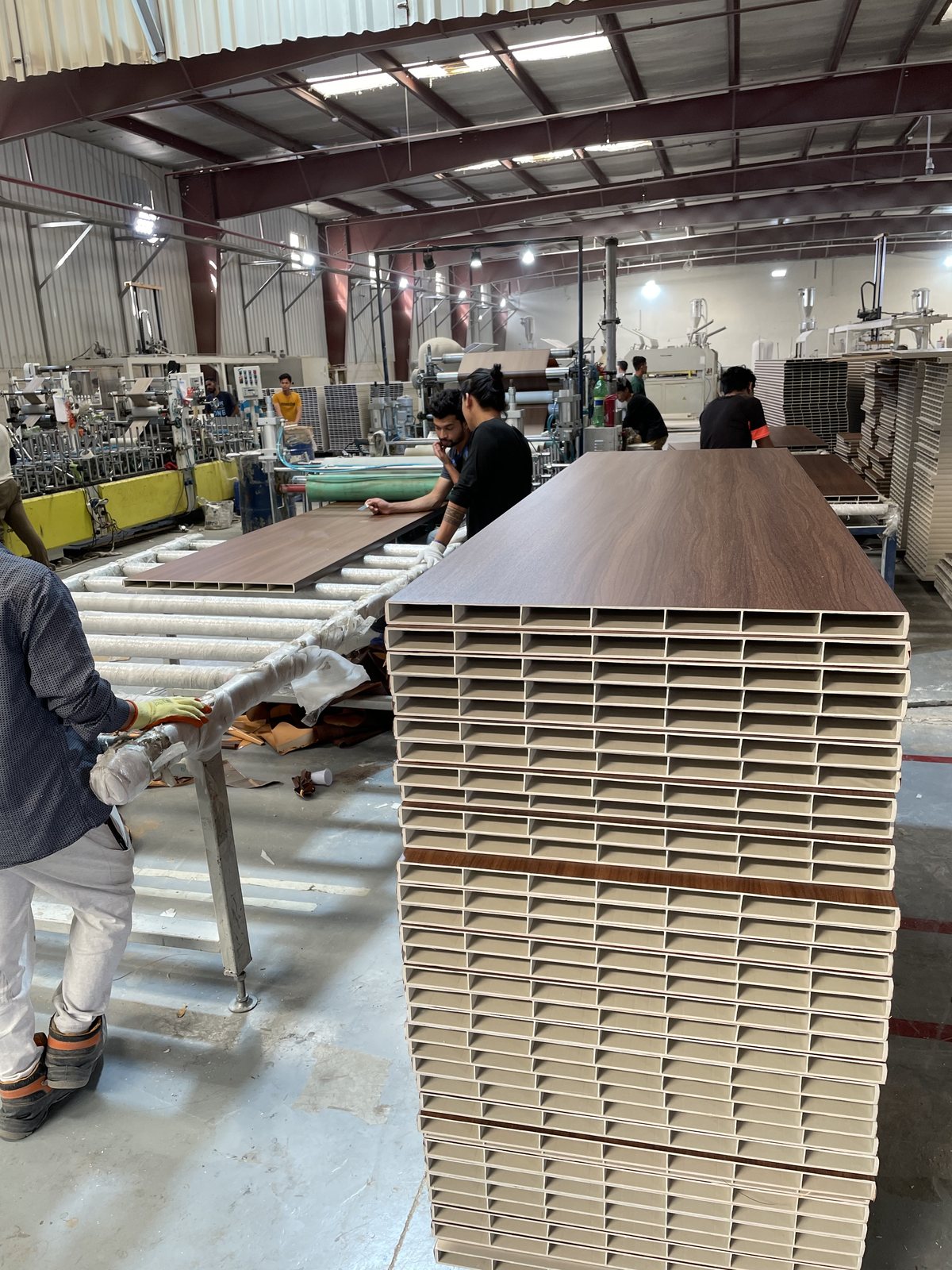
Heat and humidity affect WPC door panels at several points: raw-material storage, extrusion, cooling, cutting and final packing. The same formula can run differently when the wood powder absorbs moisture overnight or the cooling water warms up during the day.
This page is for producers supplying Southeast Asia, South Asia, the Middle East, Africa and other humid or hot markets. The focus is on practical line and factory controls, not a single climate claim.

Where the climate enters the process
Wood powder and filler can pick up moisture from the air. If the storage area is open or the material sits for several days, the extruder may see a different feed condition from one shift to the next. Venting and drying need to match the actual site, not only the material certificate.
Cooling is the second issue. A vacuum table sized for a temperate factory may struggle when the incoming water is warmer and the ambient air is humid. The chiller and water circuit should be reviewed as part of the line capacity.
- Wood powder moisture pickup
- Warm cooling water and reduced heat transfer
- Condensation on cold surfaces
- Panel stress after rapid temperature change
- Storage conditions after packing
The checks that matter after production
A tropical-market panel should be checked after a defined storage period, not only immediately after cutting. Thickness, width, flatness and weight can change as the panel equalises with the surrounding air. The packing method also matters because a sealed bundle can hold moisture.
If the door will be used in a bathroom or exterior-adjacent space, the edge and hardware details should be tested in a complete assembly. The panel alone cannot carry the whole performance claim.
How BENK plans for hot climates
BENK reviews the site temperature, cooling water source, raw-material storage and target panel. The line can be configured with suitable venting, a six-metre vacuum table and a chiller or water circuit sized for the local conditions. The buyer's building and utilities remain part of the project.
The trial should be run with material that has been stored under the same conditions as normal production. Samples should be checked after cooling and again after a realistic storage period. That gives the factory a better basis for its market claim.
- Material storage and drying plan
- Cooling water temperature and chiller capacity
- Venting for the actual moisture load
- Panel checks at cutting and after storage
- Packing that protects the panel from humid air
Production sequence
From material preparation to finished panel
- 01
Review the climate
Record ambient temperature, humidity and water source.
- 02
Protect the material
Store and dry wood powder and filler before mixing.
- 03
Set the extrusion window
Adjust venting and temperature to the actual feed condition.
- 04
Size the cooling system
Confirm chiller and water flow for the hottest production condition.
- 05
Cut and inspect
Check dimensions and surface after cooling.
- 06
Store a sample
Recheck flatness, thickness and weight after a defined period.
- 07
Approve packing
Use a method that suits the local humidity and transport route.
Reference window
Reference specification and planning range
The figures below are a starting point for discussion. The final line specification should follow the approved panel drawing, material formula and trial result.
| مقاله | Reference / planning note |
|---|---|
| Panel range | 600-1000 mm width and 40-50 mm reference thickness for door boards |
| Material control | Drying and closed storage according to the local humidity |
| خنک کننده خنک کننده | Chiller and water circuit sized for the site conditions |
| کالیبراسیون | Six-metre vacuum table in the reference line |
| Quality check | Initial and post-storage dimensions, flatness and weight |
| بسته بندی بسته بندی | Moisture-aware packing and protected edges |
How BENK fits the project
Where the BENK line supports the result
BENK can review the line and cooling setup for a hot, humid factory, but the building, raw-material storage and packing method also affect the result. A trial using locally stored material is more useful than a laboratory sample alone.
Buyer checklist
What to settle before you compare quotations
- Record the factory humidity during the trial, not only the machine settings.
- Ask how the cooling water temperature will be controlled in summer.
- Test a panel after a realistic storage period.
- Check the packing method for humid transport.
- Review edge sealing for bathroom or wet-area doors.
Questions buyers ask
WPC door panel line FAQ
Is WPC suitable for tropical climates?
WPC can be a practical door material in humid climates when the formula, panel construction and edges are designed for the application. The complete door should be tested, not just the raw material.
What is the biggest production risk in a humid factory?
Raw-material moisture variation and insufficient cooling are common risks. Both can change dimensions and surface quality during the shift.
How long should a panel be stored before checking?
The period should reflect the factory and market conditions. A defined 24-hour or longer check is more useful than measuring only at the end of the line.
Can BENK supply a chiller?
The cooling system can be reviewed with the project. The final scope depends on the site water source, ambient conditions and panel output.
Project brief
Tell us the panel, not just the machine.
Send the panel drawing, material formula, target output and factory location. BENK can then review the line configuration against the actual product.